
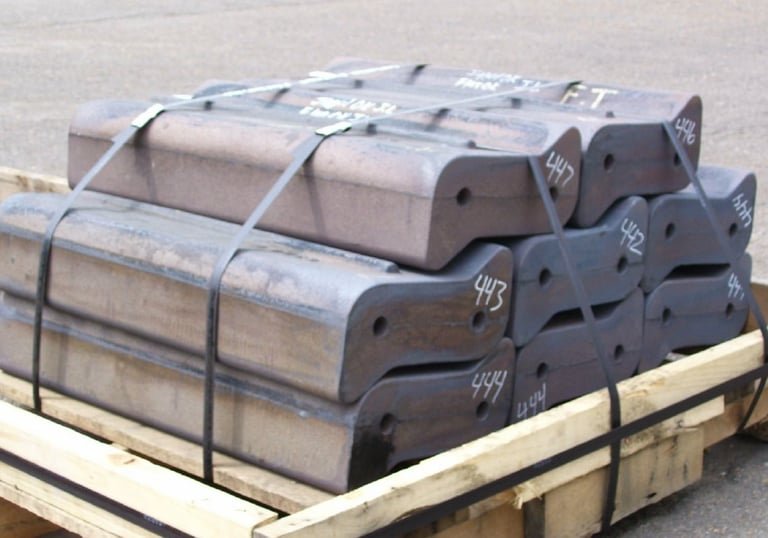
Blow bars are one of the most critical wear components in any horizontal shaft impact (HSI) crusher. They strike the material directly, making their material quality, hardness, and design essential for crushing efficiency, output quality, and overall operating cost. Choosing the wrong blow bar leads to frequent replacements, inconsistent output size, and unplanned downtime - all of which affect plant productivity and export order timelines.
Choosing the right blow bars affects crushing efficiency, wear life, and downtime. Learn about materials, compatibility, and selection factors for HSI impact crushers.
This guide covers everything you need to know before selecting blow bars for your crusher.
Why Blow Bar Selection Matters
Blow bars directly determine how efficiently your crusher breaks down material. A well-matched blow bar improves particle size consistency, reduces wear-related stoppages, and extends the interval between replacements. A poorly matched one increases fuel or power consumption, causes uneven wear, and can even damage other crusher components due to imbalance.
For plants that import blow bars, getting the selection right the first time also reduces the number of replacement orders, shipping costs, and downtime waiting for parts to arrive.
1. Material Selection
Blow bars are manufactured in several material grades, each suited to different crushing conditions:
High Chrome Iron: Contains 15-28% chromium, offering excellent abrasion resistance. Best suited for crushing hard, abrasive materials like granite, basalt, and other high-silica rocks. High chrome blow bars are less tough than manganese steel, so they perform best in applications with moderate impact but high abrasion.
Manganese Steel: Work-hardens under impact, similar to shredder hammers. Manganese steel blow bars are tougher and more impact-resistant, making them suitable for crushers processing harder, denser feed with variable impact loads. They are less abrasion-resistant than high chrome iron but far more resistant to cracking.
Martensitic Steel: A middle-ground option offering a balance between hardness and toughness. Often used when the feed material varies between abrasive and impact-heavy conditions.
Chrome-Manganese Alloy: Combines properties of both chrome and manganese to offer a blend of abrasion and impact resistance, often used when neither pure chrome nor pure manganese is ideal for the application.
2. Matching Blow Bars to Feed Material
The type of material being crushed is the biggest factor in material selection:
Soft to medium abrasive rock (limestone, dolomite): High chrome iron typically performs well, offering long wear life without excessive brittleness.
Hard, abrasive rock (granite, basalt, quartzite): High chrome iron with higher chromium content is preferred for maximum abrasion resistance.
Recycled concrete and construction demolition waste: Manganese steel or chrome-manganese alloy is often better, since this feed tends to include embedded steel and variable-density material that causes uneven impact.
Mixed or unpredictable feed: Manganese steel's toughness makes it a safer choice when feed composition varies significantly.
3. Crusher Compatibility
Blow bars must match your specific crusher model's mounting system, weight distribution, and rotor speed. Using a blow bar not designed for your exact crusher brand and model can cause:
Poor fitment leading to vibration and rotor imbalance
Reduced crushing efficiency due to incorrect impact angle
Premature wear on rotor bearings and other components
Reputable manufacturers produce blow bars compatible with leading crusher brands including Hazemag, SBM, Rubble Master, McCloskey, Stedman, Eagle, Metso, and Astec - matching OEM dimensions and mounting specifications precisely.
4. Hardness and Consistency
Hardness is typically measured in BHN (Brinell Hardness Number) or HRC (Rockwell Hardness). A good supplier will provide hardness test reports for every production batch, not just an initial sample. This matters because:
Inconsistent hardness between batches leads to unpredictable wear life
Buyers planning maintenance schedules need reliable, repeatable performance
Export buyers importing in bulk need assurance that a large order performs consistently across all units
Always request material certificates and hardness reports before committing to a large export order.
5. Balancing Cost and Wear Life
It's tempting to choose blow bars based purely on upfront price, but the real cost consideration is cost per ton of material crushed over the blow bar's working life. A cheaper blow bar that wears out in half the time, or causes inconsistent output requiring rework, ends up costing more overall - especially when factoring in shipping delays for replacement orders on imported parts.
6. Import Considerations for Export Buyers
For plants in the USA, Australia, UAE, and other importing regions, a few additional factors matter beyond the blow bar itself:
Export packaging: Proper packaging prevents transit damage, especially for long sea freight routes.
Documentation: Material certificates, packing lists, and dimensional reports simplify customs clearance.
Supplier reliability: Consistent lead times and clear communication reduce the risk of production delays caused by late deliveries.
Batch consistency: A reliable exporter tests every batch, ensuring the blow bars you receive on reorder perform identically to your first shipment.
Frequently Asked Questions
Q: How often should blow bars be replaced?
Replacement frequency depends on material hardness, feed type, and crusher operating hours. Regular wear inspection helps determine the right replacement interval for your specific application.
Q: Can I mix different blow bar materials in the same crusher?
This is generally not recommended, as mismatched wear rates can cause rotor imbalance. It's best to use a consistent material grade across all blow bar positions.
Q: What causes uneven blow bar wear?
Uneven wear is often caused by incorrect fitment, inconsistent feed material, or an improperly balanced rotor. Ensuring precise OEM-compatible dimensions helps minimize this issue.
Q: Do you provide blow bars compatible with specific OEM crusher brands?
Yes, blow bars can be manufactured to match OEM dimensions and mounting specifications for brands including Hazemag, SBM, Rubble Master, McCloskey, Stedman, Eagle, Metso, and Astec.
Q: How do I know which material grade is right for my crusher?
Share your crusher model and typical feed material (rock type, hardness, presence of recycled or mixed materials) with your supplier, and they can recommend the appropriate material grade.
Conclusion:
Selecting the right blow bars comes down to matching material grade to your feed type, ensuring precise compatibility with your crusher model, and working with a supplier who can guarantee consistent quality across every batch. For plants importing blow bars for the first time, prioritizing a supplier who provides material certificates, reliable export packaging, and clear documentation reduces risk and ensures long-term operating consistency.
At Melco Precisions, we manufacture blow bars in high chrome, manganese steel, and martensitic grades, compatible with leading crusher brands, and export to customers across the USA, Australia, UAE, and worldwide. Share your crusher model and feed material with us, and we'll recommend the right blow bar specification for your operation.