
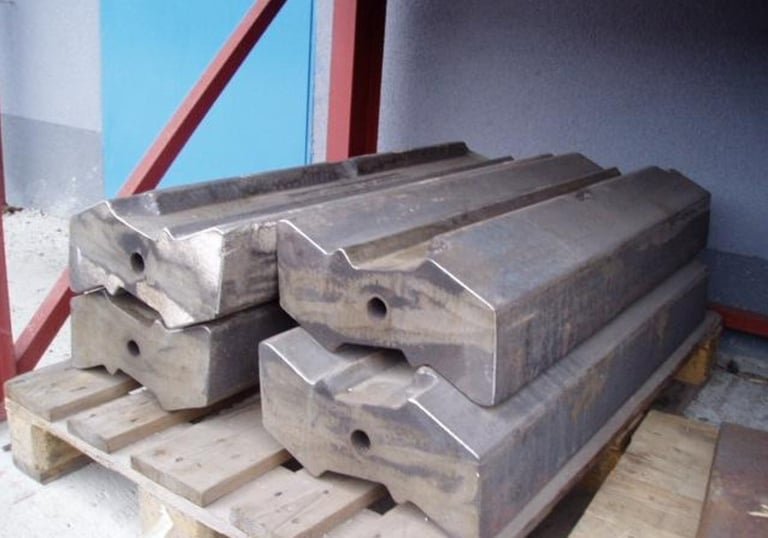
Understanding the Role of a Blow Bar
In crushing operations, performance often comes down to the quality of wear parts. Among all the components in a Horizontal Shaft Impact (HSI) crusher, the blow bar plays a central role. It is the part that actually strikes the material and reduces it to the required size. Put simply, if the blow bar is not performing well, the entire crushing process becomes inefficient. Output drops, wear increases, and maintenance costs go up.
A blow bar is a heavy-duty casting mounted on the rotor of an HSI crusher. As the rotor spins at high speed, the blow bars repeatedly hit the incoming material. This impact breaks the material into smaller fragments.
The broken material is then thrown against impact plates inside the crusher, where further reduction takes place. This cycle continues until the desired size is achieved.
Because the blow bar is constantly exposed to high impact and abrasion, its material and build quality are critical.
How the Crushing Process Works
When material enters the crusher, it does not simply get crushed once. It goes through a series of impacts. The rotor rotates rapidly, and the blow bars strike the material with significant force. After the initial impact, the material is redirected within the chamber, where it is hit again until it reaches the required size.
Throughout this process, the blow bar remains the main point of contact. That is why its durability directly affects both performance and operating cost.
Material Matters More Than Most People Think
Not all blow bars are made the same. The choice of material depends on the type of application and the nature of the material being processed.
High chrome blow bars are widely used where abrasion resistance is important. They tend to last longer when crushing materials like limestone or concrete, where wear is a major factor. However, they are less tolerant to heavy impact.
Manganese steel blow bars behave differently. Instead of being extremely hard from the start, they harden under pressure. This makes them suitable for applications where impact is more intense and feed size is larger.
There are also martensitic options, which sit somewhere in between. They offer a balance of strength and wear resistance, making them useful in mixed conditions.
Where Blow Bars Are Used
Blow bars are used across a range of industries where material reduction is required. This includes mining operations, cement plants, aggregate production, and recycling facilities. In each case, the operating conditions differ, but the importance of a reliable blow bar remains the same.
Choosing the Right Blow Bar
Selecting the right blow bar is not just about picking the hardest material. It depends on what you are trying to achieve.
If the material being processed is highly abrasive, a harder option like high chrome is usually more effective. If the feed size is large or the material is tougher, a more impact-resistant option such as manganese steel may perform better.
Compatibility with the crusher also matters. Blow bars need to match the specifications of machines such as Hazemag, Stedman, or Metso to ensure proper fit and performance.
Why Quality Makes a Difference
Using a well-manufactured blow bar can significantly reduce downtime. It helps maintain a consistent output size and reduces the frequency of replacements.
On the other hand, poor-quality parts tend to wear unevenly, require frequent changes, and can disrupt production. Over time, this leads to higher operating costs.
Maintaining Blow Bars for Better Performance
Regular inspection goes a long way in extending the life of blow bars. Monitoring wear patterns, maintaining consistent feed, and replacing parts at the right time can prevent unexpected breakdowns.
Keeping the rotor balanced and ensuring proper installation also contributes to smoother operation.
Final Thoughts
Although it may seem like just another component, the blow bar is at the heart of an HSI crusher’s performance. The right choice can improve efficiency, reduce downtime, and lower overall costs.
For anyone involved in crushing operations, understanding how blow bars work and selecting the right type is not optional. It is essential.
Call to Action
If you are looking for reliable, well-engineered blow bars for your crushing operations, you can get in touch with our team or request a quote based on your requirements.