
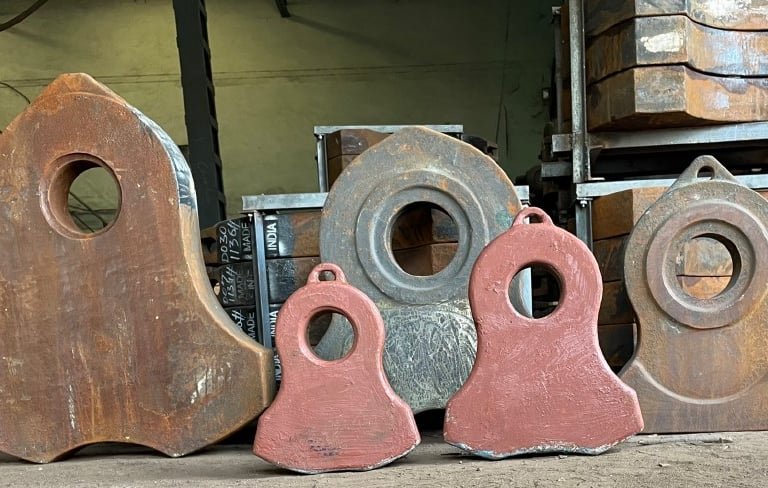
Shredder Hammers: Manufacturing Quality, Materials, Wear Life and Selection Guide
Learn about shredder hammer materials, design, wear life and selection. Find practical guidance for recycling plants and industrial applications.
Shredder hammers are among the most heavily loaded wear components in industrial metal shredding equipment. They work under repeated impact, abrasion and mechanical stress while breaking down scrap metal, automotive parts, light steel, non-ferrous materials and other difficult feedstocks.
For a recycling plant, the choice of shredder hammer affects much more than wear part replacement. Hammer material, design, heat treatment, hardness, toughness and manufacturing consistency can influence shredder performance, maintenance frequency, product output and operating cost.
This guide explains what makes a reliable shredder hammer, how different materials and manufacturing processes affect performance, what causes premature wear, and what buyers should consider when sourcing shredder hammers from a manufacturer or exporter.
What Is a Shredder Hammer?
A shredder hammer is a replaceable wear component fitted to the rotor of a hammer-type metal shredder. During operation, the rotor rotates at high speed and the hammers repeatedly strike the incoming material.
The impact breaks, tears and fractures the feed material into smaller pieces. Depending on the shredder design and application, the processed material can include scrap steel, automotive scrap, appliances, light metal, non-ferrous scrap and other recyclable materials.
Because the hammer directly experiences the working forces inside the shredding chamber, its material and design have a direct effect on maintenance requirements and overall equipment performance.
A suitable shredder hammer needs to provide a practical balance between:
✓ Impact resistance ✓ Abrasion resistance ✓ Hardness ✓ Toughness ✓ Structural strength ✓ Dimensional accuracy ✓ Consistent metallurgy ✓ Heat treatment quality
There is no single hammer grade that is ideal for every shredding application. The right choice depends on the feed material, shredder type, operating conditions and expected wear pattern.
How Do Shredder Hammers Work?
Shredder hammers are mounted on a rotating rotor. As the rotor turns, the hammers move through the shredding chamber and strike the incoming feed.
The material is subjected to repeated impact and mechanical forces. Larger pieces are progressively broken down until they reach the required size and can pass through the relevant discharge or sizing system.
The hammer itself is exposed to repeated contact with the feed material and other components inside the machine. This creates a combination of impact and abrasive wear.
The operating environment can therefore be demanding even when the hammer material is correctly selected.
A hammer that is too hard but lacks toughness may be more vulnerable to impact damage. A hammer with high toughness but insufficient wear resistance may wear away faster in highly abrasive applications.
This is why hammer selection should be based on the actual application rather than hardness alone.
Why Shredder Hammer Quality Matters
The cost of a hammer is only one part of the total cost of using a wear component.
A lower-priced hammer may appear economical initially, but frequent replacement, additional downtime, labour requirements and inconsistent performance can increase the overall cost of operation.
Manufacturing quality becomes particularly important when the shredder operates continuously.
A properly manufactured shredder hammer should have:
✓ Consistent material quality ✓ Controlled chemical composition ✓ Proper heat treatment ✓ Accurate dimensions ✓ Suitable hardness and toughness ✓ Reliable mounting dimensions ✓ Consistent production quality ✓ Proper quality inspection
For an industrial buyer, these factors can be more important than simply comparing the price per piece.
Consistent Chemical Composition
The chemical composition of the alloy influences the final mechanical and wear properties of the hammer. Variations between batches can result in inconsistent performance.
A manufacturer should have suitable controls in place to ensure that the specified material is used consistently throughout production.
Controlled Heat Treatment
Heat treatment is one of the most important stages in producing alloy wear parts. The process influences hardness, toughness and the internal structure of the material.
Poorly controlled heat treatment can result in a hammer that is excessively brittle or does not provide adequate resistance to wear.
Accurate Dimensions
Dimensional accuracy matters because hammers must fit correctly within the rotor assembly.
Incorrect dimensions can affect installation, clearances, balance and the way forces are transferred during operation.
Quality Inspection
Inspection at different stages of manufacturing helps identify dimensional, surface and material-related problems before the finished product reaches the customer.
For international buyers, consistent quality from one shipment to the next is particularly important.
Shredder Hammer Materials
Different shredding applications require different combinations of hardness, toughness and wear resistance. Common material choices include manganese steel, alloy steel and higher alloy wear-resistant grades.
Manganese Steel Shredder Hammers
Manganese steel is known for its toughness and ability to withstand heavy impact conditions.
It can be useful in applications where the hammer is subjected to substantial impact loading and where resistance to sudden failure is important.
Its performance can vary depending on the exact alloy composition, heat treatment and operating environment.
For applications involving severe impact, simply selecting the hardest available material is not always the best approach.
Alloy Steel Shredder Hammers
Alloy steel can be engineered to provide a balance between hardness, strength, toughness and wear resistance.
Different alloy systems and heat treatment processes can produce different performance characteristics.
This makes alloy steel a common choice when the application requires a combination of impact resistance and wear performance.
High Chrome and High Alloy Grades
Higher alloy and high chrome materials can provide strong resistance to abrasive wear in suitable applications.
However, material selection should always consider the actual feedstock and impact conditions.
A highly wear-resistant material is not automatically the best choice for every shredder. If the operating environment involves severe impact, toughness remains an important consideration.
Hardness vs Toughness in Shredder Hammers
One of the most common mistakes in wear-part selection is focusing only on hardness.
Hardness is important because it can help a material resist abrasive wear. However, a shredder hammer also needs to withstand repeated impact.
Toughness is the ability of a material to absorb energy without fracturing.
A practical hammer design therefore aims for an appropriate balance between hardness and toughness.
For example, a hammer operating on highly abrasive material may benefit from greater wear resistance. A hammer exposed to heavy impact from large and irregular scrap may require greater toughness.
The correct balance depends on the application.
What Causes Shredder Hammer Wear?
Shredder hammer wear is influenced by several factors, and the same hammer can perform differently in two plants using apparently similar equipment.
Feed Material
The type of material entering the shredder has a major influence on wear.
Clean, relatively consistent scrap behaves differently from mixed scrap containing dirt, stone, hardened steel, non-metallic material or other contaminants.
Material Hardness
Hard and abrasive feed materials can increase wear rates.
The presence of hardened components in scrap can also increase impact loading and cause localised damage.
Shredder Operating Conditions
Rotor speed, feed rate, machine configuration and operating practices all influence the forces acting on the hammer.
Operating outside the manufacturer's recommended conditions can increase wear or create unnecessary stress on the equipment.
Feed Size
Large pieces of material can create higher impact loads, particularly when they enter the shredding chamber irregularly.
Consistent feed preparation can therefore contribute to more predictable wear.
Contamination
Dirt, stones and other abrasive contaminants can accelerate wear.
This is particularly relevant in scrap recycling applications where the incoming material is not completely clean.
Understanding Shredder Hammer Wear Patterns
The appearance of a worn hammer can provide useful information about how it has been operating.
Uniform wear across the working surface may indicate relatively consistent operating conditions.
Uneven wear can sometimes point to issues involving rotor position, feed distribution, material flow or hammer positioning.
Cracking, chipping or localised damage can indicate excessive impact, unsuitable material properties, manufacturing issues or operating conditions that need attention.
For this reason, worn hammers should not simply be discarded without examination.
The wear pattern can provide useful information for selecting the next hammer grade or reviewing operating conditions.
When Should Shredder Hammers Be Replaced?
There is no universal replacement interval for every shredder hammer.
Replacement depends on the hammer design, material, feedstock, operating conditions and allowable wear level.
Operators should inspect hammers regularly and look for:
✓ Excessive loss of the working profile ✓ Cracks ✓ Chipping ✓ Deformation ✓ Uneven wear ✓ Damage around mounting areas ✓ Reduced shredding performance ✓ Changes in product size or output ✓ Unusual vibration or operating behaviour
The equipment manufacturer's recommendations should always be followed when determining acceptable wear limits.
How to Improve Shredder Hammer Wear Life
Selecting the right hammer is only the first step.
Match the Hammer to the Application
A hammer designed for one type of scrap may not deliver the same results in another application.
The feed material, expected impact level and abrasive conditions should be considered before selecting the grade.
Maintain Correct Operating Conditions
Correct rotor speed, feed rate and material loading can help reduce unnecessary stress.
Overloading the machine can create conditions that increase both hammer wear and mechanical stress on the equipment.
Inspect Hammers Regularly
Regular inspection helps identify wear before it becomes a larger maintenance problem.
It can also help operators identify changes in wear patterns over time.
Check the Rotor and Mounting System
A hammer does not work independently.
The condition of the rotor, mounting system and related components can affect how forces are transferred through the assembly.
Damaged or incorrectly fitted components should be addressed promptly.
Keep Feed Material Under Control
Where practical, controlling the type and size of incoming material can improve consistency.
Removing unnecessary contaminants can also reduce abrasive wear.
Shredder Hammer Design and Geometry
Material grade is only one part of hammer performance.
The physical design of the hammer also matters.
Different shredder manufacturers and machine models use different hammer shapes, mounting arrangements and working profiles.
The geometry affects how the hammer interacts with the feed material and how wear develops across the working surface.
Important design considerations can include:
✓ Overall dimensions ✓ Mounting hole configuration ✓ Working face geometry ✓ Weight ✓ Rotor compatibility ✓ Wear profile ✓ Clearance requirements
A replacement hammer should therefore be manufactured according to the correct drawing, specification and machine requirements.
Why Heat Treatment Matters
Heat treatment can significantly influence the performance of alloy wear parts.
The objective is not simply to make the hammer harder. The process needs to produce the required combination of hardness and toughness throughout the component.
An unsuitable heat treatment process can result in inconsistent mechanical properties.
Controlled heating, cooling and subsequent treatment processes help manufacturers achieve more predictable results.
For large industrial wear components, consistency throughout the cross-section can also be important.
Manufacturing Process of Shredder Hammers
A reliable shredder hammer starts with appropriate raw material and continues through several controlled manufacturing stages.
Depending on the hammer design and manufacturing method, these stages can include:
- Material selection
- Melting or preparation of alloy
- Casting or forging
- Heat treatment
- Machining
- Dimensional inspection
- Surface and visual inspection
- Final quality verification
- Packing and dispatch
Each stage can influence the finished component.
The exact manufacturing route depends on the material, hammer design and required mechanical properties.
Why Buyers Should Work With a Manufacturer
For distributors, recycling companies and industrial buyers, purchasing directly from a manufacturer can provide advantages beyond price.
A manufacturer with suitable production and inspection capabilities can work with the buyer on:
✓ Material selection ✓ Drawings and dimensions ✓ Application requirements ✓ Heat treatment requirements ✓ Quality consistency ✓ Batch production ✓ Packaging ✓ Export documentation ✓ Technical support ✓ Repeat orders
This becomes particularly valuable when a customer needs regular supplies of the same hammer specification.
Shredder Hammer Manufacturer and Exporter in India
India has a large manufacturing base for industrial casting and wear components, making it an important sourcing market for international buyers.
When selecting a shredder hammer manufacturer in India, buyers should look beyond the product photograph and quoted price.
Important questions include:
✓ What material grade is being supplied? ✓ Is the chemical composition controlled? ✓ How is heat treatment carried out? ✓ Are dimensions inspected? ✓ Can the manufacturer produce according to drawings? ✓ Is production consistent between batches? ✓ Does the supplier have experience with export orders? ✓ How are finished hammers packed for international shipment? ✓ Can the manufacturer support repeat orders?
For an exporter, reliable packaging and shipment preparation are also important because heavy wear parts need to reach the customer without unnecessary handling damage.
Choosing a Shredder Hammer Supplier
Before placing an order, buyers should provide as much application information as possible.
Useful information can include:
✓ Shredder make and model ✓ Hammer drawing or part number ✓ Existing hammer dimensions ✓ Feed material ✓ Approximate material size ✓ Operating conditions ✓ Current hammer material ✓ Existing wear pattern ✓ Required quantity ✓ Delivery location
This information allows the manufacturer to better understand the application and recommend a suitable specification.
If an existing hammer is available, photographs and dimensional information can also help during the initial discussion.
Shredder Hammers for Metal Recycling
Metal recycling is one of the major applications for industrial shredders.
Recycling plants may process a wide range of materials, including:
✓ Ferrous scrap ✓ Automotive scrap ✓ End-of-life vehicles ✓ Light iron ✓ Appliances ✓ Structural scrap ✓ Mixed metal scrap
Because the feedstock can vary significantly, hammer selection needs to account for changing impact and abrasion conditions.
A hammer that performs well on one scrap stream may require a different material or design for another.
Shredder Hammers for Automotive Recycling
Automotive recycling can create demanding conditions because end-of-life vehicles contain a mixture of metals and non-metallic materials.
The feed can include steel components, cast components, aluminium, wiring, rubber, plastics and other materials.
The hammer therefore experiences changing loads rather than a single consistent material.
Application-specific selection becomes particularly important in such environments.
Shredder Hammers for Heavy Scrap
Heavy scrap can generate substantial impact loading.
In these applications, toughness and structural integrity become especially important.
Simply increasing hardness without considering impact resistance may not produce the desired result.
The correct hammer should be selected based on the machine configuration and actual feed conditions.
Common Problems With Shredder Hammers
Several problems can reduce hammer performance.
Premature Wear
This can be related to unsuitable material selection, highly abrasive feed, incorrect operating conditions or insufficient wear resistance.
Cracking
Cracking can occur when a component experiences excessive impact or when the material and heat treatment are not appropriate for the application.
Chipping
Chipping can result from high impact loading, unsuitable hardness and toughness balance or operating conditions.
Uneven Wear
Uneven wear can indicate inconsistent feed distribution, rotor-related issues or differences in the way individual hammers are exposed to material.
Incorrect Dimensions
A dimensionally incorrect hammer may create installation and operating problems.
This is why dimensional inspection is an important part of manufacturing quality.
How to Reduce Shredder Downtime
Unplanned downtime can be expensive in a recycling operation.
A practical maintenance strategy should include:
✓ Regular hammer inspection ✓ Monitoring wear patterns ✓ Keeping replacement hammers available ✓ Checking mounting components ✓ Maintaining correct operating conditions ✓ Recording hammer performance ✓ Reviewing material selection when wear changes
Maintaining a stock of commonly used replacement hammers can also reduce delays when replacement becomes necessary.
What Information Should You Send to a Shredder Hammer Manufacturer?
When requesting a quotation, sending only the words "shredder hammer" may not provide enough information for accurate product identification.
Ideally, send:
Machine Information
Shredder manufacturer and model.
Part Information
Part number, drawing or existing hammer dimensions.
Application
Type of scrap or material being processed.
Quantity
Number of hammers required.
Location
Country and delivery location.
Existing Specification
Current hammer material or grade, if known.
Performance Information
Current wear pattern or approximate service experience, if available.
Photos of the existing hammer and rotor assembly can also be useful.
Why Consistency Matters for International Buyers
International buyers often need the same wear components repeatedly.
A supplier may deliver one successful batch, but the real test is whether subsequent batches maintain the same dimensional and material consistency.
For distributors, this is particularly important because their customers expect predictable product quality.
Consistent manufacturing can help simplify purchasing, inventory planning and replacement schedules.
For an exporter, communication is equally important. Clear specifications, drawings, inspection requirements, packing details and shipping documentation can reduce misunderstandings between supplier and buyer.
Shredder Hammer Cost: What Determines the Price?
The price of a shredder hammer depends on several factors.
These can include:
✓ Material grade ✓ Hammer weight ✓ Design complexity ✓ Manufacturing method ✓ Heat treatment ✓ Machining requirements ✓ Quantity ✓ Inspection requirements ✓ Packaging ✓ Shipping destination
The cheapest hammer is not necessarily the lowest-cost option.
A better way to evaluate a wear part is to consider its total operating value.
If a slightly higher-quality hammer provides more predictable service and reduces replacement frequency or downtime, the initial price difference may be justified.
How to Compare Two Shredder Hammer Manufacturers
When comparing suppliers, look at more than the quotation.
FactorWhat to CheckMaterialSpecified alloy and chemical compositionHeat treatmentProcess control and consistencyDimensionsAccuracy and inspectionManufacturingSuitable production processQualityInspection and verificationApplication supportAbility to recommend suitable gradesExport experiencePackaging and shipment handlingRepeat supplyAbility to maintain consistent specifications
This approach gives buyers a better understanding of the actual value offered by each supplier.
Frequently Asked Questions About Shredder Hammers
What is a shredder hammer used for?
A shredder hammer is used in industrial shredders to break and process materials through repeated impact. They are commonly used in metal recycling and scrap processing applications.
Which material is best for shredder hammers?
There is no single material that is best for every application. Manganese steel, alloy steel and higher alloy grades can each be suitable depending on feed material, impact conditions and required wear resistance.
How long does a shredder hammer last?
Service life depends on the hammer material, feedstock, machine conditions, rotor speed, contamination and operating practices. A fixed service-life figure should not be assumed across different applications.
How can I increase shredder hammer wear life?
Start with correct material selection and then maintain appropriate operating conditions. Regular inspection, controlled feed material and correct installation can also help improve service life.
Why do shredder hammers crack?
Cracking can be associated with excessive impact, unsuitable material properties, an incorrect hardness and toughness balance, manufacturing issues or severe operating conditions. The actual cause should be evaluated from the wear and damage pattern.
How do I select the right shredder hammer?
Consider the shredder model, feed material, operating conditions, existing hammer specification, wear pattern and required performance. Providing this information to the manufacturer can help identify a suitable hammer.
Can shredder hammers be manufactured according to drawings?
Many industrial wear-part manufacturers can produce hammers according to customer drawings, dimensions or approved specifications. Buyers should confirm drawing requirements and tolerances before placing an order.
What should I provide when asking for a shredder hammer quotation?
Provide the machine model, hammer drawing or part number, dimensions, material being processed, required quantity and delivery location. Photos and details of the existing hammer can also be useful.
Can a manufacturer supply shredder hammers for export?
Yes. Manufacturers with export experience can supply wear parts for international customers and support requirements such as packaging, documentation and shipment preparation.
Is a harder shredder hammer always better?
No. Hardness is only one part of performance. A shredder hammer also needs suitable toughness and impact resistance. The correct balance depends on the application.
Final Thoughts
Shredder hammers operate in one of the most demanding areas of a recycling plant. Their performance depends on much more than the material name listed on a product specification.
Material composition, heat treatment, hardness, toughness, design, dimensional accuracy and manufacturing consistency all contribute to the final performance of a hammer.
For recycling companies, distributors and international buyers, the right approach is to select a hammer based on the actual application rather than simply choosing the hardest or lowest-priced option.
Melco Precisions Pvt Ltd manufactures and exports industrial wear parts for demanding applications. For shredder hammer requirements, buyers can share their machine model, drawing, existing hammer dimensions and application details to discuss a suitable specification.