
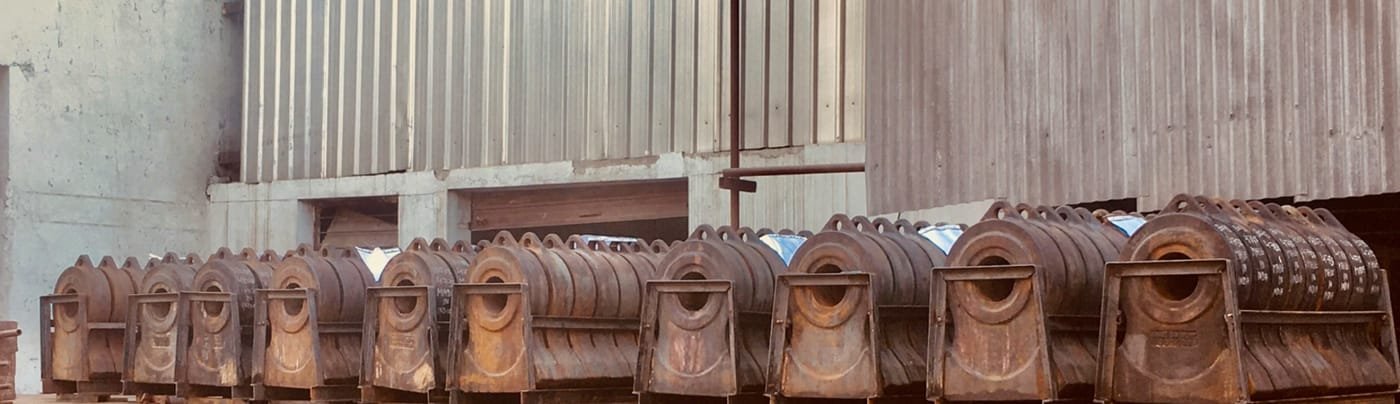
A first order of replacement shredder hammers should answer a purchasing question: can this supplier deliver the agreed part consistently for your machine and operating conditions? A low quotation or a single photograph cannot settle that question. A documented trial can give your maintenance and procurement teams evidence for the next order.
This guide proposes a buyer-side trial procedure for scrap recycling plants and wear-part importers. It is not a universal acceptance standard. Agree the inspection scope and pass/fail criteria with the supplier and your maintenance team before manufacture. Use the machine manufacturer's requirements for fitment, installation and safe operating limits.
1. Define what the trial must prove
Separate delivery acceptance from operating performance. Delivery acceptance asks whether the shipment matches the approved specification. Performance assessment asks how it behaves in the plant. Keeping these decisions separate makes a discrepancy easier to investigate and prevents an undocumented expectation becoming a dispute after the parts arrive.
- Fitment: the approved part identity, pin-hole geometry, mounting arrangement and machine compatibility.
- Manufacturing scope: the agreed material designation, inspection method, traceability and documents.
- Operating result: the agreed wear observations, usable service interval and reasons for removal under recorded conditions.
Choose a trial quantity with the maintenance team that is suitable for the machine's required hammer arrangement. Do not choose an arbitrary small quantity that conflicts with balancing or configuration requirements. Compare shredder hammer material and fitment options before requesting a trial quotation.
2. Freeze the drawing and order requirements
A model name alone may leave room for different rotor configurations or previous modifications. Give the supplier an approved drawing with a revision identifier, units, critical dimensions and agreed tolerances. If working from a sample, identify its wear and ask how the original geometry will be established. A worn hammer is evidence of service conditions, not automatically a complete manufacturing specification.
- Part identity
- Machine make and model, rotor configuration, part number where available, drawing number and revision.
- Material
- Agreed grade or specification and the records required to demonstrate conformity; avoid descriptions such as “premium steel” alone.
- Inspection
- Dimensions to report, measuring method, sampling scope and any agreed hardness or other tests.
- Supply scope
- Quantity, individual/set identification, packing, destination and documents included in the order.
Do not add a generic hardness target copied from another supplier's catalogue. A comparison of manganese and alloy steel hammers is useful background, but the order must state the actual selected material and its agreed inspection requirements. Where a dual-hardness design is proposed, ask which regions are being evaluated and how the relevant results will be recorded.
3. Agree the pre-shipment evidence
Ask for evidence tied to your order, rather than a generic certificate from an unrelated batch. Specify which records you need before shipment and which should accompany the goods. An inspection photo should show the part identification and the feature being checked; a close-up without context is difficult to use later.
- Order and drawing revision referenced on the inspection report.
- Batch or heat identification, where agreed, linked to the supplied parts and material records.
- Results for the agreed critical dimensions, with units and acceptance limits.
- Any agreed test results, clearly identifying method, test location and the part or batch covered.
- Packing list with quantities and identifiers, plus labelled photographs before packing.
If independent inspection is needed, agree its scope, timing and cost before placing the purchase order. Do not assume that every quotation includes third-party testing or a particular certification. For the broader supplier assessment, see how to audit a foundry remotely.
4. Inspect the delivery before releasing it to maintenance
On receipt, reconcile quantities and identifiers with the packing list. Record transit damage, packaging condition and missing documents. Check the agreed dimensions with suitable equipment and competent personnel. Keep photographs and reports with the purchase order so a later complaint can be tied to a specific part or batch.
If an agreed requirement is not met, hold the affected parts pending investigation and written resolution. Do not modify a casting or force it into service to rescue the trial schedule. Installation, handling, isolation procedures, hammer arrangement and rotor balance must follow the machine manufacturer's instructions and be carried out by qualified personnel.
5. Record a fair operating baseline
“It lasted longer” is difficult to interpret if the feed, throughput or removal rule changed. Before the trial, document the previous set's operating conditions and why it was removed. If that history is incomplete, acknowledge the gap rather than presenting the new run as a controlled comparison.
- Before starting
- Part/set ID, starting condition, feed description, known contaminants, machine configuration and agreed assessment points.
- During the run
- Operating hours, measured processed tonnage where available, feed changes, stoppages and relevant maintenance events.
- At assessment
- Consistent photographs and agreed wear measurements, remaining usable geometry and observations at the pin region.
- At removal
- Reason for removal, final measurements, tonnage/hours, abnormal events and the maintenance decision.
Take measurements only under the plant's approved safe maintenance procedure. Use the same measurement locations and removal criteria across comparisons. Keep exceptional events visible in the record: a changed scrap mix or a separate rotor issue can make the result unsuitable for a direct supplier comparison. Early hammer failure diagnosis and rotor, pin and grate wear checks help frame the investigation.
6. Decide whether to repeat, revise or stop
Review the trial with both procurement and maintenance. Accepting the delivered parts does not prove every future batch will behave identically. Equally, a short run interrupted by unrelated equipment trouble is not a clean rejection of the material. State what the evidence supports and what remains uncertain.
- Repeat: agreed delivery checks passed and the operating evidence supports the intended application.
- Revise and retrial: identify a specific change, record a new drawing or specification revision, and agree fresh assessment criteria.
- Hold or reject: document the unmet requirement and the agreed resolution without silently changing the original specification.
For economic comparison, use measured tonnage and clearly defined costs; see the wear-part cost-per-tonne guide. Do not turn an estimated service interval into a guaranteed saving. Keep the approved trial documentation as the starting specification for the next order.
Trial-order enquiry template
We require a trial quotation for shredder hammers. Machine/model: [ ]; rotor/part reference: [ ]; drawing and revision: [ ]; current material and reason for change: [ ]; feed and operating conditions: [ ]; quantity/configuration: [ ]; inspection records required: [ ]; destination country and port: [ ]; required delivery window: [ ].
Please identify any missing fitment information, state the proposed material and inspection scope, and confirm the drawing approval process before manufacture.
For a trial-order discussion, send Melco your shredder hammer requirement. Buyers in the USA, Australia, UAE and other export markets can share their machine details, approved drawing, quantity and destination. Confirm technical and delivery requirements in the quotation before ordering.